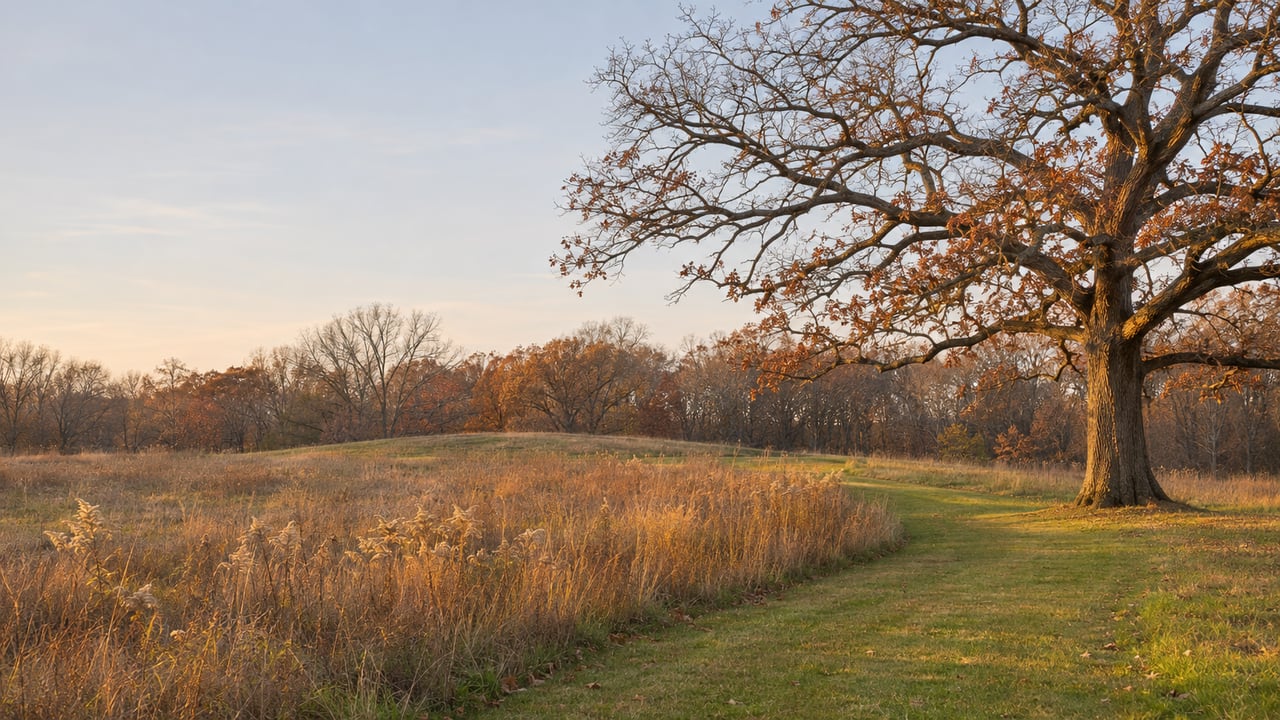
Spring Hill's Battlefield Is Still Being Pieced Together, and November 29 Is the Night to Walk It
November 12, 2026
November 12, 2026
Just before sunset on November 29, 1864, soldiers from Gen. Hiram B. Granbury's Brigade crossed a stretch of the Cheairs family farm north of the house that Spring Hill now knows as Rippa Villa. They ran into Federal resistance and took a handful of casualties. Then they were pulled back from Columbia Pike because the rest of Gen. Pat Cleburne's Division had become engaged.
That night, the Confederate troops camped southeast and east of town while the Federal army slipped north. Granbury and many of his Texas soldiers died the next day at Franklin.
The land they crossed is 11.57 acres. The Battle of Franklin Trust calls it the Smith Tract and signed a contract to buy it on August 19, 2025. So 161 years after the fight, the ground where it happened was still being bought back one parcel at a time. On Sunday, November 29, the 162nd anniversary, the Trust will lead small evening tours at Rippa Villa at the same hours those events played out.
The Battle of Spring Hill is remembered less for its fighting than for what happened after dark. According to the American Battlefield Trust, Gen. John Bell Hood's Confederate army moved to get across the Columbia Turnpike, which was the Union army's road north toward Franklin. Meanwhile, Gen. John Schofield's Federals reinforced the crossroads at Spring Hill. The Confederate attack came late in the afternoon in pieces, and it was driven back.
The Battle of Franklin Trust says the short but intense fight left almost 750 casualties. The bigger consequence came during the night. The American Battlefield Trust's battle summary says miscommunication among the Confederate high command let Schofield's army slip past the Confederates posted along the turnpike and reach Franklin. The Battle of Franklin followed the next day, November 30.
The Trust's Rippa Villa history places that march on roads residents still use. Hood meant to take the Columbia Turnpike between Spring Hill and Rippa Villa. Instead, Schofield's troops moved through Spring Hill, on through Thompson's Station, and up to Franklin. Hood's headquarters that night was Oaklawn, the Absalom Thompson House. Confederates had camped around the plantation the night before, November 28 to 29, and the house still stands on Route 31.
The American Battlefield Trust describes the tactical result as a stalemate. What mattered more was the army that got away in the dark and arrived in Franklin the next morning.
The American Battlefield Trust's visitor page says most of the Spring Hill battlefield has been lost to commercial and residential development. What remains protected was assembled over more than 25 years, by several organizations and with several kinds of money.
| Piece of the battlefield | Size | How it was protected |
|---|---|---|
| Core battlefield tract | 118 acres | Acquired with help from the American Battlefield Trust's predecessor groups and the American Battlefield Protection Program, then dedicated as an interpreted park in August 1999 |
| Land north of the house | 84 acres | Secured by the American Battlefield Trust as part of an effort toward a unified park |
| Rippa Villa and the adjoining Cheairs acreage | 98 acres | Bought by the City of Spring Hill in 2017 |
| Smith Tract, just north of the Cheairs home | 11.57 acres | Purchase contract signed by the Battle of Franklin Trust on August 19, 2025 |
The city's purchase is the reason the house is open for tours today. In 2021 the city sought a new manager for the property, the Battle of Franklin Trust responded, and city leaders approved it. The Trust began managing the site in mid-2021, and the city has since renewed that contract through 2037. The Trust uses the two-word spelling Rippa Villa. Older pages, including some of the American Battlefield Trust's, still use Rippavilla.
The Smith Tract adds another layer of funding. The Trust says the purchase is supported in part by the Civil War Sites Preservation Fund, which is administered by the Tennessee Wars Commission and the Tennessee Historical Commission, along with the American Battlefield Protection Program and individual donors. WKRN reported that the City of Spring Hill would also contribute through its hotel/motel tax. Mayor Matt Fitterer told the station, "When we have an opportunity to protect that battlefield land from development and turn it into a city asset and a cultural asset where that history can be shared and celebrated, we're going to try to encourage those opportunities."
The tract is not finished parkland. The Trust said the property would need cleanup and maintenance, and that it is writing historical markers for the site and for other Spring Hill battlefield locations. It also named three more battlefield sites in Spring Hill and Franklin that might be purchased in the future. Battle of Franklin Trust CEO Eric Jacobson described the near-term plan to WKRN as "Interpretive signage, maybe a walking trail, but the initial first step is to save it."
This year's commemoration follows the order of the original events, moving from Spring Hill to Franklin over three days. The Battle of Franklin Trust's commemoration page lists the schedule:
The evening tours cost $30 per person per tour, and each group is capped at 20 people. Tickets must be bought online in advance. The Trust says the tours focus on the events of those evenings and on what soldiers and families experienced as it was happening. Because the experience is sober, children under 6 are not permitted. The Trust also asks visitors not to buy tickets for both Carnton and Carter House on November 30, since there isn't time to travel between the two sites.
With two Rippa Villa groups of 20, there are 40 places for the Spring Hill anniversary evening. Rippa Villa 7 p.m. tickets and Rippa Villa 8 p.m. tickets are sold through the Trust's booking site.
The house tells more than the battle story. When the Trust took over in 2021, the Williamson Herald reported that Jacobson planned to interpret three subjects there: the Spring Hill battle, the Cheairs family, and the enslaved people who lived on the property. WKRN reported that about 75 enslaved people lived at Rippa Villa at the time of the battle. In August 2025, a bust of Anna Bunch, who was formerly enslaved at the plantation, was unveiled at the site.
You can walk part of the battlefield before November 29. The American Battlefield Trust maintains an interpretive walking trail southeast of town along Kedron Road and Reserve Boulevard. Experience Tennessee lists the battlefield at 3510 Kedron Road and says you can explore it by car or on foot. Its markers explain the battle's vantage points, the enslaved people in the area, and where Hood's command post stood. The Historical Marker Database puts the start of the loop at the Civil War Trails parking lot, near a marker at 3525 Kedron Road. That parking detail comes from a volunteer-run database, so check access before you go.
If you walk the Kedron Road loop on a November afternoon and then stand at Rippa Villa after dark on the 29th, you'll have seen both halves of the story. One is the late-afternoon fight that stalled. The other is the night march up the turnpike that Hood meant to block near the house now standing at 5700 Main Street. "There's no better way to understand our past than to actually come and visit a place where it happened," Jacobson told WKRN. He added that the Trust's sites draw almost 100,000 visitors a year, most of them from outside Tennessee.
Most of the Spring Hill battlefield now sits under the town's homes and businesses, so the history is closer to your street than it might seem. If you're curious how your neighborhood fits into that story, or what your home is worth today, Gabrielle Grooters is glad to help. Get your instant home valuation or schedule a free consultation, and let's talk about Spring Hill, past and present.

I blend proven market strategies with a passion for interior design to showcase your home at its best and help you move with confidence. Every detail matters—and I'm here to ensure your journey is smooth, supported, and beautifully executed.

Gabrielle Grooters
5083 Main St Spring Hill, TN 37174